Experiments Explore Optimal Shape, Size for PAR Absorption
Blueberries don’t all grow the same way. In my fields, varieties such as Sentinel and Arcadia grow to about six‑and‑a‑half feet tall, whereas others like Patrecia and Primadonna remain more modest in height. The story gets even richer when you consider canopy width: Snowchaser and Optimus spread out like a balloon, whereas Sweetcrisp and Keecrisp let their canopies stay tighter and narrower. Seeing this natural variation made me wonder whether the shape and size of a blueberry plant’s canopy could make a difference in how it absorbs light.

Light is the fuel of photosynthesis, but not all light is equal. The portion that drives plant growth lies between 400 and 700 nanometers, known as photosynthetically active radiation, or PAR. A blueberry leaf needs about 600 micromoles of PAR per square meter per second to hit its peak photosynthetic rate. Our results indicate that every leaf at the top of the canopy gets that PAR intensity. But leaves lower down in the canopy often miss out.
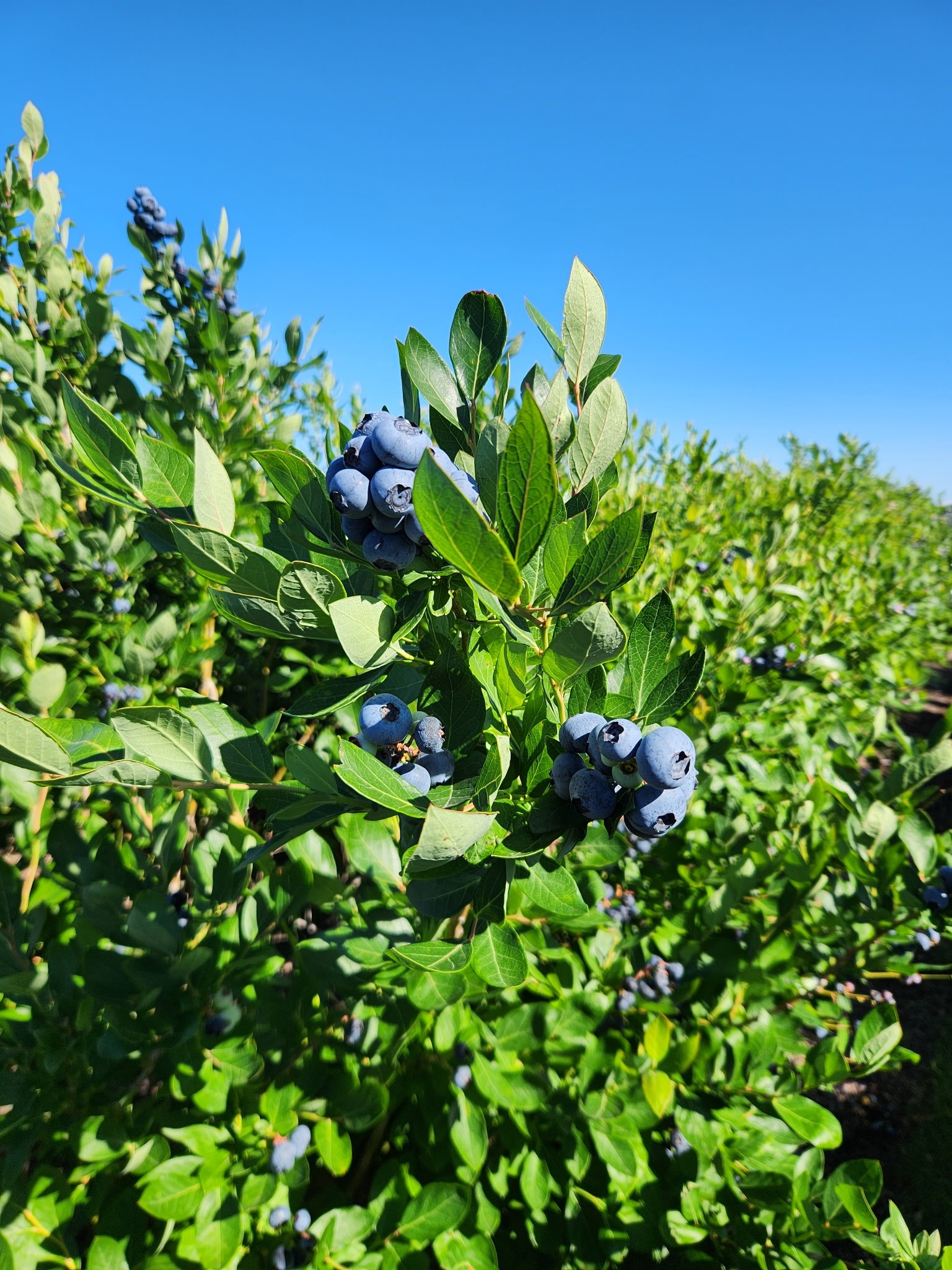
For example, lower leaves of Optimus, Sentinel, and Colossus, only received 250 micromoles of PAR—less than half the amount needed for full photosynthetic efficiency. This is a problem because carbohydrates from photosynthesis are needed to grow and ripen blueberry fruits. Consequently, fruits in the dark parts of the canopy can ripen very slowly, extending the harvest season and increasing harvest costs.
These lessons got us thinking about what the future of canopy management in blueberry could look like. Large canopies create challenges. More leaves mean higher water and fertilizer demands and more landing spots for pests such as chilli thrips. Clearly, size may be a liability. Could pruning to smaller, more orderly canopies be better for concentrated yield and day‑to‑day management? Could a smaller canopy spread light more uniformly, reducing those dark patches and lowering overall inputs? We have experiments underway to answer these questions. We will keep you posted on our findings.
CREDIT:
GERARDO H. NUNEZ, associate professor, University of Florida